Showing posts with label construction site injury. Show all posts

Thursday, August 26, 2021

Harnesses and Fall Protection Injuries

The leading cause of construction workplace deaths is falls. Each year more than 100,000 injuries and deaths are attributable to work-related falls. Falls are a leading cause of fatalities and serious injuries, in construction as proper fall protection is not always equipped at sites.

Employers must protect their workers and take the following steps to ensure their safety.

Under the OSHA regulations, employers are required to provide appropriate safety equipment and gear to prevent falls and other accidents. In general industry, fall protection must be provided at 4 feet elevations, and in shipyards, fall protection must be provided at 5 feet elevations. Fall protection must be provided at 6 feet at construction sites.

Under the Occupational Safety and Health Act of 1970, employers are responsible for providing safe and healthful workplaces for their employees.

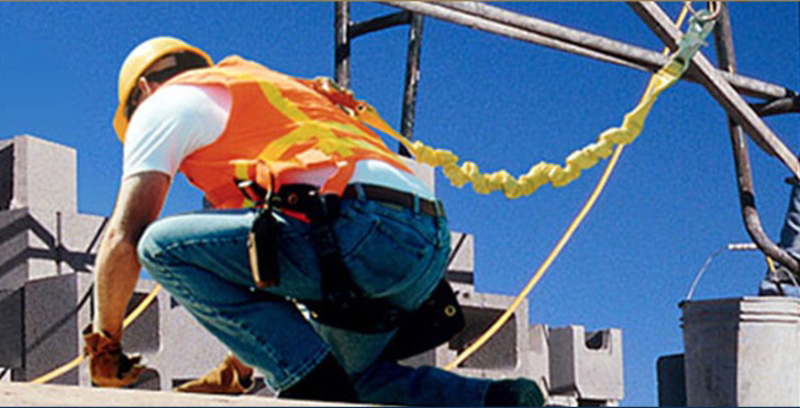
Proper fall protection can include adequate and properly constructed guardrails or scaffolding. But some types of jobs are not conducive to guardrails or scaffolding including roofing and framing. In these jobs, the required type of fall protection is called a “personal fall arrest system”. This fall protection system is composed of a harness, lanyard, rope and hard point for connection. Without providing ALL components of the harness fall protection system, workers will not be properly protected from a fall! An example of a worker wearing a harness-type fall protection system is above.

Fall Protection Injury
Many injured workers or families of workers killed on the job are under the mistaken impression that all they can recover are workers compensation benefits. This is not the case. In many cases, there are other responsible parties that can be held responsible so a worker or their family can obtain more than the very limited benefits offered by workers’ compensation insurance.

On many worksites and construction sites, general contractors can be held responsible for ignoring the fact that trade subcontractors (such as roofers and framers) are not providing fall protection to their workers or failing to carry out fall protection training responsibilities. The Construction Accident Attorneys at Miller Weisbrod has a long history of holding general contractors responsible when a worker is injured due to the lack of fall protection or lack of proper fall protection training.

A general contractor ignored its own requirements for safety training of a subcontractor workforce. As a result, Our client never received training in how to properly use his fall protection equipment. Our client fell two stories and hit the ground because the equipment was hooked up improperly. He was left paralyzed. When the general contractor refused to tender their insurance limits, Clay Miller tried the case to a Dallas County jury in October 2017, and obtained a verdict of $26,500,000, including $15,000,000 of punitive damages.

Common Injuries from Falls:
  • Traumatic brain injuries
  • Spinal cord injuries
  • Fractures
  • Amputation
  • Severe burns, abrasions, or electrocutions
  • Permanent disabilities
  • Death

These injuries often have devastating effects on injured victims and their families. Victims may face substantial medical expenses and a costly and time-consuming recovery.

Employers in the construction industry often violate several of OSHA’s safety requirements designed to prevent workplace accidents. Lack of protection against falls is the most frequently cited OSHA violation while failing to provide general requirements for scaffolding is the third most frequent violation reported.

Common Causes of Falls:
  • Lack of safety equipment – Employers are often required to use fall protection systems, guardrails, covers and other systems to prevent falls on site
  • Lack of safety training – Employers are required to train employees about known job hazards and about how to operate safety equipment properly
  • Dangerous working conditions – Employees who work under dangerous conditions such as unprotected sides of a building, on scaffolding in disrepair or around worksite debris have a high risk of being injured on the job

Employers are responsible for providing provide fall protection systems and ensuring that walking and working surfaces have the strength and structural integrity to support workers before any employees work on these surfaces.

OSHA Fall Safety Standards:
Unprotected Sides and Leading Edges
OSHA requires the use of guardrail systems, safety net systems or personal fall arrest systems if there is an unprotected side or leading edge with a drop of more than six feet or more.

Hoist Areas
Employees who work in a hoist area are to be protected from falling six feet or more by using a guardrail or personal fall arrest system.

Holes
Covers, guardrail systems or personal fall arrest systems are to be used to protect workers from falling through holes or skylights that are six feet or more above lower levels.

Excavation
Employees at the edge of an excavation site that is six feet or more in depth must be provided with a fence, barricade or guardrail system if the excavation site is not obvious.

Dangerous Equipment
Guardrail systems or equipment guards must be erected to prevent an employee from falling onto dangerous equipment that is less than six feet below him or her.

If you or someone you love suffered a fall injury at a construction site, do not hesitate to contact the Dallas Construction Accident Attorneys of Miller Weisbrod. Call our offices in Dallas at 214.987.0005 or toll free at 888.987.0005 for a free consultation. You may also contact us by filling out the form on this page for answers to your important questions or to schedule an appointment.

Tuesday, August 24, 2021

Uncovered Construction Site Holes

One of the most common construction accidents resulting in death are falls through unprotected holes in flooring. Often times, holes in flooring are not properly marked, without safety barricades or covered and secured resulting hundreds of serious injuries and deaths to workers on those floors and workers below as well.

According to OSHA, falls account for approximately 35% of construction worker deaths every year. Within that 35% of construction deaths and accidents, unprotected edges, falls through floor holes and wall openings, misused fall protection, and falls to lower levels in partially complete buildings are responsible for a number of workers’ deaths. Work safety requires that employers eliminate job hazards and take reasonable efforts to protect construction workers from life-threatening falls through unprotected floor or wall openings.

The Construction Site Accident Attorneys of Miller Weisbrod will bring lawsuits against the building owner, general contractor and all sub-contractors involved in creating the open hole, allowing the open hole to exist, allowing the open hole to exist and failing to properly guard open holes.

OSHA requires Worksite employers to control the following Open-Hole situations:
Floor holes that can be accidentally walked into should be guarded with either standard railing (including toe boards) on any exposed side, or be secured and covered with appropriate warning signs. that can be accidentally walked into should be guarded with either standard railing (including toe boards) on any exposed side, or be secured and covered with appropriate warning signs. Safety nets, personal restraint systems, and fall arrest systems should also be used when necessary to prevent falls through holes in the floor.

Wall openings that have a 6 foot or greater drop and where the bottom of the opening is less than 39 inches from the above working surface should be restrained with guardrails, safety nets, and other safety systems as needed.

*Ropes, barricades and toe boards should be provided whenever there is a wall opening that is less than 4 inches above the working surface or whenever work is being performed on a floor or wall opening.

Fall protection measures for holes in the floor or other fall risks are often not assessed when beginning construction work. It is the employer and contractor’s responsibility to make sure appropriate fall protection measures are taken for any fall risks, not limited to holes in floors or walls, but additionally providing safety measures like stair railings, handrails, and safety lines.

While working on a roof, our client was moving decking when he fell through a hole. As a result, Our client was left paralyzed. Our Personal Injury Lawyers obtained a verdict of $5,500,000.

Many employers fail to recognize the severity of injury or death that can result from accidents from relatively low heights. The majority of deaths from falling in construction sites come from heights of less than 10 feet.

Either the appropriate safety harnesses to prevent falls through holes, or adequate training is not provided to employees. Many times, employers neglect language barriers, and do not provide proper training in the worker’s language. Therefore, making them less able to protect themselves or understand the severity of the danger involved in their labor.
Unmarked Construction Holes
Falling through holes in the roof, skylight openings or falling through holes in floors and walls can result in serious and debilitating injuries that can last a lifetime and/or death.

Falls through floor injuries include:
  • Broken feet, ankles, legs
  • Back injuries, spinal injuries, crushed and severed spinal cords
  • Traumatic brain injuries, concussions, neck injuries, paralysis, paraplegia, and quadriplegia

Injuries like these often require long term medical care for the rest of the worker’s life preventing the worker from returning to work temporarily or permanently.

Contact our Work Injury Attorneys The Dallas Work Injury Lawyers of Miller Weisbrod offer informed counsel and experienced representation to clients in Texas and nationwide. To discuss your case in a free initial consultation with an experienced lawyer, please fill out the contact form on this page to schedule an appointment. You can also call us directly at 214-987-0005 or toll free at 888-987-0005.
Work Injury Lawyer Clay Miller

Thursday, January 17, 2019

Four leading causes of worker deaths on construction sites

FATAL FOUR

According to OSHA, the leading causes of worker deaths on construction sites were falls, struck-by-object, electrocutions and caught-in/between. These “Fatal Four” were responsible for more than 64% of the construction deaths in 2015.


FALLS

The leading cause of construction workplace deaths in 2015 was from falls and each year more than 100,000 injuries and deaths are attributable to work-related falls. Falls are a leading cause of fatalities and serious injuries, in construction as proper fall protection is not always equipped at sites. Employers must protect their workers and take the following steps to ensure their safety.

  • Provide a guard rail and toe-board around every elevated open sided platform, floor, and runway, as well as around dangerous machines and equipment
  • Include safety harness and line, safety nets, stair railings and hand rail if required on the job site
  • A general contractor ignored its own requirements for safety training of a subcontractor workforce. As a result, Fernando Canales never received training in how to properly use his fall protection equipment. Fernando fell two stories and hit the ground because the equipment was hooked up improperly. Fernando was left paralyzed. When the general contractor refused to tender their insurance limits, Clay Miller tried the case to a Dallas County jury in October 2017, and obtained a verdict of $26,500,000, including $15,000,000 of punitive damages.

  • Select and provide required personal protective equipment to workers and train workers about job hazards in a language that they can understand
STRUCK-BY-OBJECT

The second leading cause was struck-by-object which includes objects that are falling (suspended load coming loose), flying (thrown tools or debris), swinging (load swaying) or rolling (vehicle or heavy equipment in motion). In these scenarios, workers are often caught off guard and do not have enough time to react and move out of the way. To help ensure worker safety you can practice these prevention tactics.

  • Wear safety glasses, goggles or a face shield when using power tools and ensure protective guards are in good condition
  • Secure tools and materials using toe boards, screens, and debris nets
  • Avoid areas where work is being performed above and always wear a hard hat at all times while on the construction site
  • Never position yourself under a suspended load, always verify that the heavy equipment operator sees you, and steer clear of vehicles and heavy equipment in use
ELECTROCUTION

The third leading cause of construction workplace deaths in 2015 was electrocution. In fact, electrical hazards cause more than 300 deaths and 4,000 injuries in the workplace each year. Electricity is a serious workplace hazard, and sadly many of these injuries and fatalities could be easily avoided by taking the following precautions.

  • Provide safety training and the proper personal protective equipment (PPE) for your employees
  • Reinforce the importance of always wearing PPE even if employees think it slows them down, or they are experienced so are not at risk
  • For Arc Flash protection in particular use PPE that has an arc rating equal to or greater than the calculated incident energy
CAUGHT-IN-BETWEEN

The fourth leading cause of construction workplace deaths in 2015 was caught-in-between. These are accidents where a worker’s body part is caught, crushed or squeezed between two or more objects and happen as a result of collapsing materials; body parts pulled into unguarded machinery and equipment rollovers. So how can you prevent these caught-in-between accidents?

  • Be familiar with equipment to know where the pinch, sheer, wrap and crush points are located, as well as pull-in areas
  • Shut down equipment before doing repairs or inspections and chock the wheels on equipment that could move or roll
  • Keep your focus on what you are doing and watch for people carrying objects that block their view
  • Encourage employees to wear close-fitting clothing, leave their jewelry off while at work, and pull back long hair into a bun to prevent being caught in moving machinery
CONTACT US

Our attorneys have won several multimillion dollar verdicts and settlements on behalf of construction accident victims and their families. Our record of proven results is one of the many reasons individuals choose our firm to handle their cases.

If you were seriously injured or a loved one died in a construction accident caused by a negligent contractor or subcontractor or OSHA safety violations, we encourage you to call our offices in Dallas today at 214.987.0005 or toll free at 888.987.0005 to schedule a free consultation.

Monday, October 16, 2017

MILLER WEISBROD WINS $26,500,000 JURY VERDICT

MILLER WEISBROD WINS $26,500,000 JURY VERDICT IN A CONSTRUCTION ACCIDENT CASE

On October 4th 2017, a Dallas County Jury returned a verdict in the case of Fernando Canales vs. RJC Midwest L.P. in the amount of $26,500,000. The verdict included $11,500,000 of actual damages and $15,000,000 in punitive damages in a construction fall case. The case was tried by firm partner Clay Miller and Josh Birmingham who joined the firm on first day of the trial.

Fernando Canales is a Honduran National that worked as a decker in the construction industry. Decking is the placing of plywood on top of the structural framing to form the floor, wall and roof surfaces of a building. Fernando, while always a hard worker, was and is a simple man—he has a 2nd Grade education and is unable to read or write in either his native Spanish or English.

For years, prior to his accident Fernando had been diligent in wearing a harness and tying a safety rope in an effort to protect himself from a multi-story fall. Fernando had never received any training on actually how to properly use the fall protection equipment. Fernando had “learned” how to secure the safety rope by watching others when he first started working in decking. What Fernando did not know was that he was and had been securing the safety rope backwards for years—instead of clipping the lanyard into his harness, Fernando was tying it wood structures on the building and hooking the opposite end to his harness.

On the day of his accident, Fernando was wearing his harness and tied off in the manner he believed was correct. When he slipped instead of having the lanyard “arrest” his fall the rope spooled out and he went to the ground two stories below. The impact of the fall damaged his spinal cord, leaving Fernando a paraplegic.
The General Contractor RJC Midwest Admitted in Deposition Testimony and then again during trial cross examination that it had the responsibility to train not only employees but subcontractors on how to properly use fall protection equipment.


RJC’s corporate representative admitted under cross-examination that it’s on-site safety coordinator ignored RJC’s own safety manual when he failed to carry out this training. Despite these admissions, the Defense Attorney argued vigorously that the fall was 100% Fernando’s fault because he had hooked up the safety rope incorrectly. The jury saw and appreciated that it was not fair to blame the victim when the Defendant had wholly failed in their obligations to train and assigned 100% of the responsibility to RJC.

Deposition of Robert Jordan Jr.


Trial transcript of the cross examination of Robert Jordan Jr.

This is the 2nd 8 figure verdict in the last 60 days for Clay Miller. On August 11, 2017, a jury in Jackson, Tennessee returned a $30,800,000 verdict (including $20,000,000 in punitive damages) against Navistar International arising from a commercial fraud case involving the sale of 18-wheelers.

Miller Weisbrod handles cases involving serious injury and death all across Texas and the United States. We would welcome the opportunity to put our experience and resources to work for you and your clients through a variety of arrangements including referrals or joint ventures.

Miller Weisbrod, LLP is a national law firm specializing in catastrophic injury and wrongful death cases. Partners Clay Miller and Les Weisbrod have built the firm’s reputation with successful verdicts, settlements, appeals and favorable decisions across the country. With resources and finances available to take on the powerful interests that have caused harm, the firm is committed to providing quality representation for clients who are seriously injured and families of victims who are killed as a result of the negligence or misconduct of others. Miller Weisbrod has offices in Dallas and affiliate offices in Houston and Austin. For more information call (214) 987-0005 or visit www.millerweisbrod.com


Friday, January 20, 2017

Workplace Deaths at an 8-Year High


Workplace Deaths at an 8-Year High: When Workers' Comp is not the Sole Remedy

The Bureau of Labor Statistics recently released its annual report on work place fatalities.
The report revealed that workplace deaths have climbed to nearly 5,000 deaths. This is the highest number of workplace deaths since 2008. Workplace fatalities had been declining since hitting a peak in 2006.

Several interesting observations about the report: Men accounted for 93% of all workplace fatalities, the occupation with the highest number of deaths was truck driver (745 deaths), 903 Hispanic/Latino workers died on the job (two-thirds were foreign-born) which is the highest number from any other year, other than 2007 when the home building market was at its pre-crash high and 650 of the workplace deaths involved workers over the age
of 65.

Several factors have played a role in this decline during the last several years. First, the strengthening of government and industry safety regulations has provided workers with safer environments. Second, the economy following the crash of 2008 led to a reduction in building and manufacturing — two of the more dangerous occupations. As the economy recovers and the new President-elect promises to roll back government regulations, a likely consequence of both will be increased workplace accidents and fatalities.

Many employers carry workers’ compensation insurance in Texas. Under these plans, the employee is compensated regardless of fault and the employee’s family, in the case of death, receives partial income replacement benefits for various periods of time. The trade-off is the employee’s family cannot sue the employer for actual damages if the employee’s death was caused by negligence. This statutory immunity is granted by the Texas Labor Code.

What if a family comes to your office and their loved one has been killed on the job due to the wrong-doing of the employer, is the family limited to just workers’ compensation benefits? The answer is “Maybe Not.”
Here are the questions to ask:
  • Did the deceased employee leave a spouse and/or any children?
  • Was the death caused not just by negligence but by possibly “gross negligence” of the employer? (meaning the risk was known and the company ignored the risks despite this knowledge)
  • Is the gross negligence attributable to a vice-principal (i.e. manager/supervisor) or caused by conduct that had been ratified by the company (even implicitly) on previous occasions?
If the answer to the above three questions is “Yes” then Texas Law allows the surviving spouse and/or the children (but not the parents) of the deceased employee to sue the employer for punitive damages only. The Burden of Proof is high and the punitive damages are subject to a cap of 2 times the economic damages plus $750,000 of non-economic damages (so actual damages must be proven, even though not recoverable, for purposes of the cap calculation.)

At Miller Weisbrod, we have successfully handled dozens of cases involving the death of an employee caused by the gross negligence of the employer.

Examples of cases successfully resolved over the last year include the following fact patterns:
  • Employee killed when a house being demolished unexpectedly collapsed—the employer failed to have OSHA-mandated Engineering Survey completed prior to starting work
  • Employee’s death caused by a failure to control traffic during a highway construction project
  • Employee killed when a form fell on him at a manufacturing facility—employer failed to brace the form during maintenance activities despite warnings to do so
  • Employee’s died after a forklift carrying a wooden box being used as a work basket flipped over—the employer knew the 17 year old forklift driver had no experience and knew the practice was dangerous
  • Employee falls to his death when lifting up a piece of wood he believed was trash—the wood was covering a hole in a multi-story parking garage and was not marked or secured pursuant to OSHA regulations

If you are contacted by a family of a worker killed in a situation that involves wrong-doing of some degree, we would be honored to work on this case with you. We will put our resources to work in order to investigate the facts to determine if a gross negligence case can be made. While evidentiary and legal hurdles exist in these cases, we can put our experience and expertise to work to maximize the potential for recovery.


Miller Weisbrod, LLP is a national law firm specializing in catastrophic injury and wrongful death cases. Partners Clay Miller and Les Weisbrod have built the firm’s reputation with successful verdicts, settlements, appeals and favorable decisions across the country. With resources and finances available to take on the powerful interests that have caused harm, the firm is committed to providing quality representation for clients who are seriously injured and families of victims who are killed as a result of the negligence or misconduct of others.

Miller Weisbrod has offices in Dallas and affiliate offices in Houston and Austin. For more information call toll-free at (888) 987-0005.

Wednesday, June 1, 2016

Miller Weisbrod Settles Construction Accident - Dangerous Pump Jack


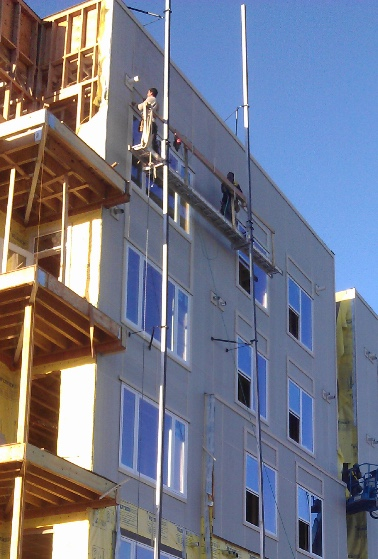
Our clients were siding contractors on a large apartment construction project in South Central Texas. In order to place large pieces of pre-fabricated siding, the workers needed to have an elevated platform to work at the necessary heights. Since the work involved moving horizontally along the face of the building, stationary scaffolding did not make practical sense because it takes so long to erect, disassemble and move. Instead, the typical aerial platform for this and similar trades is called a pump jack.


This device utilizes two horizontal metal poles and a platform that can be lifted or “jacked” up and down to the necessary heights to perform the work.

OSHA generally requires independent lifelines connected to harnesses unless an adequate guardrail system can surround the entire work platform. But in many cases, the pump jack must be placed inside crevices in such a way that a smaller platform without guardrails is utilized. Industry practice is that a bolt is placed at the top of a building so the workers can hook long lanyards/lifelines to hang down and attach to their harnesses. This allows protection should the platform fail or become unstable.

In our case, the superintendent for the general contractor knew about the industry standard and claimed that the siding contractors were always tied off when on the pump jacks (that did not have proper guardrails). Our clients claimed they never had been issued harnesses and there were no hard points for lifeline connection on the roof of the apartments. They had been working for three weeks when their platform became unstable (due to inadequate bracing) causing them to fall over the side. One client suffered several orthopedic fractures — the other suffered a broken spinal cord leaving him permanently paralyzed.

The problem was collectability — our clients were hired by Edwin, who was hired by Raul, who was hired by Jessie who was hired by a company in Kansas that had the siding subcontract but had never visited the job site or met in person Jessie, Raul, Edwin or our clients. The Kansas company had been contracted by the General Contractor on the job.

Our theory was that the general contractor knew that the lack of fall protection was dangerous and approved the practice by failing to require fall protection even though they walked by the workers a half dozen or more times every day for several weeks.
Cross examination of the job superintendent:


On the strength of this cross examination and other admissions from the general contractor’s employees were able to secure a substantial confidential settlement that will provide for the life care needs of our paralyzed client and compensated his co-worker for his orthopedic injuries.

Miller Weisbrod has partnered with law firms across the state of Texas on a referral and joint venture basis to pursue cases of catastrophic injury and wrongful death arising from construction and work site incidents. We would welcome the opportunity to work with you to obtain justice for your clients injured or killed on the job.

Miller Weisbrod, LLP is a national law firm specializing in catastrophic injury and wrongful death cases. Partners Clay Miller and Les Weisbrod have built the firm’s reputation with successful verdicts, settlements, appeals and favorable decisions across the country. With resources and finances available to take on the powerful interests that have caused harm, the firm is committed to providing quality representation for clients who are seriously injured and families of victims who are killed as a result of the negligence or misconduct of others.

Miller Weisbrod has offices in Dallas and affiliate offices in Houston and Austin. For more information call toll-free at (888) 987-0005.

What is a Personal Injury?


When you or a loved one has been injured, the first thing that comes to mind is simply receiving medical treatment and moving forward with your life. However, it is important to recognize that some people may have legal recourse.

Suffering a physical or psychological injury due to another individual's negligence is a simple definition for a personal injury. In the court of law, it must be proven that a person's careless actions caused your injuries, which led to further damages, such as lost wages or mental anguish.

A personal injury case may go through civil court proceedings or be settled out of court through an informal settlement. In most cases, a personal injury claim can be settled before heading to court. However, in cases where a settlement cannot be agreed upon, it is important to find a lawyer who has experience going to trial.

Types of Personal Injury Claims
It can be difficult to determine if someone else's careless actions caused your injury, however, these are some of the most common causes of a personal injury:

• Car accidents
• Motorcycle accidents
• Workplace incidents | Construction accidents
• Slip and fall | Premises Liability
• Defective products

In each of these situations, the person(s) at fault had a duty of care to behave in a responsible manner that would not lead to an accident or injuries. Unfortunately, their failure to exercise a duty of care led to serious consequences.

Contact Us
When you or a loved one has suffered at the hands of another, the personal injury lawyers of Miller Weisbrod, LLP can help you file a claim for compensation.

Our experienced personal injury attorneys offer free case evaluations to those who believe they may be entitled to compensation. For more information, we invite you to contact our offices in Dallas at 214.987.0005 to schedule a free initial consultation with our experienced personal injury trial lawyers.

If you are calling from outside the DFW Metroplex, please call us toll free at 888.987.0005. You may also contact us by e-mail now for prompt attention or to request an appointment.

Monday, April 25, 2016

Worksite Guardrail Accidents


Electrician
On an apartment construction job in North Texas, an electrician Carlos knelt down and began to feed an extension cord from the second story balcony down to the ground so it could be plugged in below. Carlos placed his hand on the temporary guardrail that had been constructed as a fall protection safety precaution. Suddenly, the guardrail gave way propelling Carlos head over heels to the ground below. The impact broke his back leaving him a paraplegic.


The faulty temporary guardrail

Plumber
At another apartment complex job in Lewisville, a plumber named Jerry was at work inside a second story unit. Jerry was waiting on a delivery of plumbing equipment for the construction project. When he hears a honk, he walks to the second story balcony and places his hand on the temporary guardrail as he looks down to see if his delivery truck arrives. The next thing he knows he is falling straight down, guard rail in hand. The fall shatters Jerry ankle and hind foot joint ending his twenty plus year career as a Master Plumber.


Improperly secured temporary guardrail

Painter
On a new apartment construction job in Lubbock, a painter is told there is left over paint on a balcony on the third floor. It is a typical windy West Texas day. When the painter opens the door to the balcony, the wind effect pulls the door violently outward along with the painter. As the painter is thrown to the balcony he reaches for what is supposed to be there—the guard rail. But someone has removed it in order to stock materials for the upper floor, the painter is propelled off the balcony breaking his spine leaving him permanently paralyzed.

These are just a few examples of cases Miller Weisbrod attorneys have handled involving improperly constructed/maintained guardrails. OSHA 1926.952 sets that standard for guardrail construction and maintenance. The guardrail system must have a top rail that is 42 inches above the walking/working level—in order to prevent someone from being able to fall over the top of the rail. The system should have a mid-rail that is 21 inches from the working/walking level—in order to prevent someone from slipping underneath the rails. And the guardrail system must be capable of withstanding, without failure, a force of at least 200 pounds applied in any outward or downward direction along the top edge of the rail.

We see time after time, guardrails that are constructed in such a way that they do not withstand anywhere near the 200 pounds of pressure, allowing the rails to fail and send workers tumbling to the ground. The most common incidence is where guard rails are constructed or replaced by nailing the rails to the outside of the building rather than on the inside or onto an independent wooden member. This allows the guard rail to be pushed out (often with little force depending upon what it is nailed into) when someone places their hand on it for balance or just resting part of their body weight on it.

Other guardrail negligence occurs when guardrails are removed by trades for work or material stocking—the repeat offenders are typical the framing or stucco crews that remove the guardrails to place waterproofing wrap or stucco around balconies or landings or drywall contractors loading in their materials. Many times these guardrails are replaced incorrectly (as described above) or many times not replaced at all!

Our lawsuits are typically against either framing subcontractors or the general contractor for allowing the dangerous condition to exist or failing to maintain the guardrails correctly. Many general contractors contractually require the framing subcontractor to construct and maintain the guardrails throughout part of or the entire project.

Below are two excerpts from the cross examination of framing superintendents where guardrails were not maintained to withstand proper force:


Miller Weisbrod has partnered with law firms across the state of Texas on a referral and joint venture basis to pursue cases of catastrophic injury and wrongful death arising from construction and work site incidents. We would welcome the opportunity to work with you to obtain justice for your clients injured or killed on the job.

Contact Us
If you were seriously injured or a loved one died in an oil field or construction accident caused by a negligent contractor or subcontractor or OSHA safety violations, we encourage you to call our offices in Dallas today at 214.987.0005 or toll free at 888.987.0005 for a free consultation. You may also contact us by e-mail today for answers to your important questions or to schedule an appointment.

Wednesday, March 2, 2016

Demolition Construction Accident Verdicts


Some of the most hazardous construction operations involve the demolition of structures. In June of 2013, a building being demolished in Philadelphia collapsed onto an adjacent structure killing a half dozen people and seriously injuring more than a dozen more. This case brought to the front page news what our firm has seen time and time again in demolition construction accidents—there is no requirement under most state and local ordinances requiring a company obtaining a demolition permit to show any level of competence.

Several of our cases have highlighted this sad fact. Two years ago, a young husband and father was killed when a two-story chimney on house he was demolishing on the TCU campus collapsed on top of him. Our lawsuit against the employer revealed the company was a paving contractor that had only ever demolished portable buildings (cheap mobile home structures used at schools for temporary classrooms) on a single occasion. But when this paving company applied for a demolition permit from the city of Fort Worth to demolish nearly a dozen brick buildings (including a large church and a two story apartment building) no inquiry at all was made into the qualifications of a company that spent its entire time building and paving parking lots. When deposed, the company’s owner and superintendent admitted none of the crew, including the deceased, had any experience before the day of the collapse in demolition. He also admitted that he was completely unaware of any of the OSHA or industry demolition safety standards and he had no written demolition plan for any of the structures.


The remains of the demolished house on the TCU campus

Subpart T of the OSHA construction safety standards lays out the minimum requirements for demolition safety.

The very first section of the standard requires that an “engineering survey” be performed by a competent person before demolition operations begin. The stated purpose of this standard is to prevent any “unplanned collapse” during the demolition of the structure that could endanger workers or bystanders. This standard is almost universally violated in every demolition lawsuit we have pursued—usually because an inexperienced or incompetent company decides to take on a demolition job that it is not qualified to perform.

But this failure to perform engineering surveys is not just ignored when a paving company decides to become a demolition subcontractor. In another case, an actual demolition contractor failed to perform an engineering survey prior to beginning operations. As roof joists were being cut, the building collapsed upon other workers killing our client. What is unforgivable is that our investigation revealed the company had been cited by OSHA 3 years earlier for failing to perform an engineering survey during a surprise inspection by OSHA. Here are excerpts of our cross examination of the demolition company’s safety director that was hired just months after the first citation:


Following this deposition, we settled the gross negligence only death case (the employer had workers’ compensation insurance) for the full amount of all available insurance.

Contact Us
Miller Weisbrod has partnered with law firms across the state of Texas on a referral and joint venture basis to pursue cases of catastrophic injury and wrongful death arising from construction and work site incidents. We would welcome the opportunity to work with you to obtain justice for your clients injured or killed on the job.

Contact our office in Dallas at 214.987.0005 or toll free at 888.987.0005. You may also contact us by e-mail today for prompt answers to your questions or to schedule an appointment.

Tuesday, December 8, 2015

Miller Weisbrod obtains $5,500,00.00 Settlement

Clay Miller, partner in Miller Weisbrod, obtained a $5,500,000 settlement for his client Jose Luna for injuries sustained in a construction accident. Mr. Luna was paralyzed when he fell in a hole that was concealed by an unmarked and unsecured cover while working on a roof of a day care that was being constructed in Plano, Texas.
Miller brought suit against the General Contractor (Journeyman) and the subcontractor (Fox) that had initially created the hole and placed the cover. The hole was part of the original plans of the project and was intended to be a roof hatch once the building was complete.

On December 18, 2013, Jose Luna was walking across the roof of the building to obtain some plywood for a wall he was building.
He felt his foot make contact with something and then the sensation of falling. Upon impact with the floor one story below, Luna’s spinal cord suffered a severe injury leaving him paralyzed from the waist down. The General Contractor attempted to place blame on the subcontractor that had installed the hole cover. Through discovery it was determined that the hole cover had been installed and secured but not marked as required by OSHA.
OSHA safety regulations require that hole covers be both marked and secured. OSHA 1926.502(i)
Through progress photos it was determined that the hole cover had been unsecured approximately one month before Luna’s fall and after the area was released by the subcontractor to the General. Through deposition questioning, the job superintendent admitted that the hole cover had been unsecured under his orders to take measurements of the hatch hole. This was a different story than he had told his company safety director post-accident—he tried to blame the incident on the subcontractor and Luna’s employer. During a trial cross-examination (because he was out of trial subpoena range) weeks before the start of trial, the job superintendent admitted the following:


A settlement was reached with the subcontractor the Friday before trial for $500,000. The insurance carrier for the General Contractor was stuck at $3,000,000 up until the morning of trial. As the Court was beginning to hear Motions in Limine and just before jury selection, the carrier (facing a noon deadline) increased its offer by $2,000,000 allowing the entire case to settle for $5,500,000. With this settlement, Luna’s life care plan can be fully funded with a structured settlement and upfront cash payment.

Over the last twenty plus years, Clay Miller has partnered with law firms across the state of Texas on a referral and joint venture basis to pursue cases of catastrophic injury and wrongful death arising from construction and work site incidents. Miller Weisbrod would welcome the opportunity to work with you to obtain justice for your clients injured or killed on the job.
________________________________________

Miller Weisbrod, LLP is a national law firm specializing in catastrophic injury and wrongful death cases. Partners Clay Miller and Les Weisbrod have built the firm’s reputation with successful verdicts, settlements, appeals and favorable decisions across the country. With resources and finances available to take on the powerful interests that have caused harm, the firm is committed to providing quality representation for clients who are seriously injured and families of victims who are killed as a result of the negligence or misconduct of others. Miller Weisbrod has offices in Dallas and affiliate offices in Houston and Austin. For more information call (888) 987-0005 or visit www.millerweisbrod.com.