Tuesday, April 16, 2019

Fisher‐Price recalled all 4.7 million of its Rock 'n Play Sleepers

A Consumer Reports investigation into the safety of the Fisher‐Price Rock ’n Play Sleeper—a product designed and marketed for babies to sleep on an incline—found that it is tied to at least 32 infant deaths.

The federal government and Fisher‐Price on April 5 issued a warning about the product, which safety advocates believe does not go far enough. Medical experts say babies should be placed flat on their back alone and free of soft bedding—and not at an incline—to minimize the risk of accidental suffocation. Products such as the Fisher‐Price Rock ’n Play Sleeper do not align with these recommendations.

The safety alert from the Consumer Product Safety Commission and Fisher‐Price includes a warning from the CPSC for consumers to stop using the product when infants turn 3 months old or “as soon as an infant exhibits rollover capabilities.”

The alert cites reports of “10 infant deaths in the Rock ’n Play that have occurred since 2015, after the infants rolled from their back to their stomach or side, while unrestrained.”

Fisher‐Price confirmed that the company is aware of approximately 32 fatalities since the 2009 introduction of the Rock ’n Play Sleeper, including the 10 noted in the joint release with the CPSC.


History of a Dangerous Products
  • 2010 Fisher‐Price Trike Recall | 10 reports of incidents resulting in injury
  • 2010 Fisher‐Price Recalls Healthy Care, Easy Clean & Close to Me High Chairs |
    14 reports of injury
  • 2009 Skull Fracture Prompts Recall of Fisher‐Price 3‐in‐1 high chairs
  • 2009 Largest Crib Recall in US History: Stork Craft drop‐side cribs that bear the Fisher‐Price logo |
    4 infants have died after becoming entrapped in the drop‐down side mechanism.

The attorneys of Miller Weisbrod have the proven legal skill and experience to handle the complex evidentiary issues involved in a wide range of defective product liability litigation.

If your infant was injured or tragically killed due to a defective consumer product, we encourage you to call our offices today at 214.987.0005 or toll free at 888.987.0005.

Thursday, January 17, 2019

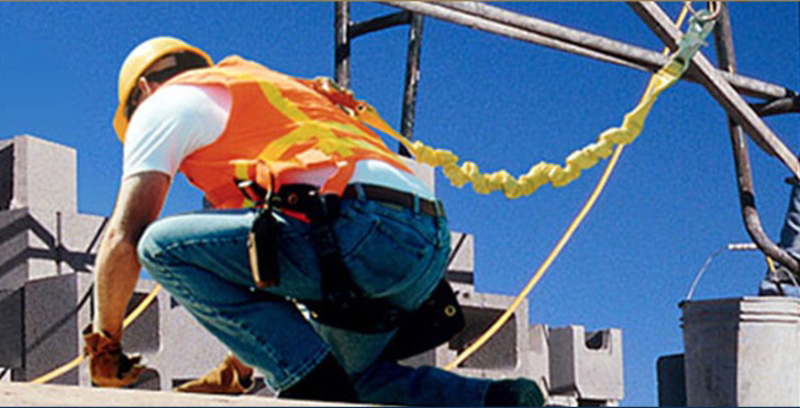
Four leading causes of worker deaths on construction sites

FATAL FOUR

According to OSHA, the leading causes of worker deaths on construction sites were falls, struck-by-object, electrocutions and caught-in/between. These “Fatal Four” were responsible for more than 64% of the construction deaths in 2015.


FALLS

The leading cause of construction workplace deaths in 2015 was from falls and each year more than 100,000 injuries and deaths are attributable to work-related falls. Falls are a leading cause of fatalities and serious injuries, in construction as proper fall protection is not always equipped at sites. Employers must protect their workers and take the following steps to ensure their safety.

  • Provide a guard rail and toe-board around every elevated open sided platform, floor, and runway, as well as around dangerous machines and equipment
  • Include safety harness and line, safety nets, stair railings and hand rail if required on the job site
  • A general contractor ignored its own requirements for safety training of a subcontractor workforce. As a result, Fernando Canales never received training in how to properly use his fall protection equipment. Fernando fell two stories and hit the ground because the equipment was hooked up improperly. Fernando was left paralyzed. When the general contractor refused to tender their insurance limits, Clay Miller tried the case to a Dallas County jury in October 2017, and obtained a verdict of $26,500,000, including $15,000,000 of punitive damages.

  • Select and provide required personal protective equipment to workers and train workers about job hazards in a language that they can understand
STRUCK-BY-OBJECT

The second leading cause was struck-by-object which includes objects that are falling (suspended load coming loose), flying (thrown tools or debris), swinging (load swaying) or rolling (vehicle or heavy equipment in motion). In these scenarios, workers are often caught off guard and do not have enough time to react and move out of the way. To help ensure worker safety you can practice these prevention tactics.

  • Wear safety glasses, goggles or a face shield when using power tools and ensure protective guards are in good condition
  • Secure tools and materials using toe boards, screens, and debris nets
  • Avoid areas where work is being performed above and always wear a hard hat at all times while on the construction site
  • Never position yourself under a suspended load, always verify that the heavy equipment operator sees you, and steer clear of vehicles and heavy equipment in use
ELECTROCUTION

The third leading cause of construction workplace deaths in 2015 was electrocution. In fact, electrical hazards cause more than 300 deaths and 4,000 injuries in the workplace each year. Electricity is a serious workplace hazard, and sadly many of these injuries and fatalities could be easily avoided by taking the following precautions.

  • Provide safety training and the proper personal protective equipment (PPE) for your employees
  • Reinforce the importance of always wearing PPE even if employees think it slows them down, or they are experienced so are not at risk
  • For Arc Flash protection in particular use PPE that has an arc rating equal to or greater than the calculated incident energy
CAUGHT-IN-BETWEEN

The fourth leading cause of construction workplace deaths in 2015 was caught-in-between. These are accidents where a worker’s body part is caught, crushed or squeezed between two or more objects and happen as a result of collapsing materials; body parts pulled into unguarded machinery and equipment rollovers. So how can you prevent these caught-in-between accidents?

  • Be familiar with equipment to know where the pinch, sheer, wrap and crush points are located, as well as pull-in areas
  • Shut down equipment before doing repairs or inspections and chock the wheels on equipment that could move or roll
  • Keep your focus on what you are doing and watch for people carrying objects that block their view
  • Encourage employees to wear close-fitting clothing, leave their jewelry off while at work, and pull back long hair into a bun to prevent being caught in moving machinery
CONTACT US

Our attorneys have won several multimillion dollar verdicts and settlements on behalf of construction accident victims and their families. Our record of proven results is one of the many reasons individuals choose our firm to handle their cases.

If you were seriously injured or a loved one died in a construction accident caused by a negligent contractor or subcontractor or OSHA safety violations, we encourage you to call our offices in Dallas today at 214.987.0005 or toll free at 888.987.0005 to schedule a free consultation.

Tuesday, May 1, 2018

Clay Miller Makes D-Magazine's "2018 Best Lawyers In Dallas"


D-Magazine's 2018 Best Lawyers In Dallas

Clay Miller Makes D-Magazine's "2018 Best Lawyers In Dallas"

Clay Miller of Miller Weisbrod, LLP has been selected to D Magazine’s Best Lawyers in Dallas for 2018. Clay’s practice is limited to cases involving catastrophic injury, wrongful death, and business loss.

A nationally recognized firm, Miller Weisbrod has helped victims of personal injury, medical malpractice, faulty products, as well as defective drugs & medical devices pursue financial recovery as a result of another’s negligence. The firm has an impressive track record in obtaining multi-million dollar verdicts and settlements for victims and their families.

Clay Miller has recently obtained a $30,800,000 jury verdict in a commercial fraud case against Navistar arising from the sale of 18-Wheelers with Maxxforce Engines in Jackson, Tennessee. Six weeks later, Clay obtained a $26,500,000 jury verdict in a construction accident case in Dallas.

Along with partner, Les Weisbrod, Miller Weisbrod’s team of attorneys can offer you the sound advice and concerted legal action you need in order to pursue financial justice. From our office in Dallas, we serve clients nationwide.

Every case is different depending upon the facts. Attorneys’ fees will be $10,780,000 and $10,600,000 respectively and expenses are $297,284.49 and $115,924.27respectively that will be deducted from any final recovery on these verdicts.

Thursday, February 22, 2018

Sleep Deprived Truckers


Companies often force their drivers to work shifts with little or no sleep. Risking their lives on the job.

On average, trucks serving the ports of Los Angeles and Long Beach operated 470 times a day without the required break. Those trucks were involved in at least 189 crashes within a day of an extended period on the clock. Federal crash records do not indicate who was at fault. With some exceptions, federal rules say commercial truckers must take a 10hour break every 14 hours.

In August 2013, a Container Intermodal Transport trucker barreled into stopped traffic at 55 mph. A teenager was tragically killed, and seven people were sent to the hospital. Seven months later, a Pacific 9 Transportation driver had just finished his 45th hour on the clock in three days when he ran over and killed a woman crossing the street. A Gold Point Transportation truck was moving containers for 15 hours in one day when it crashed in Long Beach, California, injuring four.

Jose Juan Rodriguez, who drove for Morgan Southern for five years, said he sometimes worked 16-hour shifts for days at a time, a claim the company denied. He kept a bucket of ice water by his seat to splash on his face when he felt himself nodding off. More than once, he said, he found himself hallucinating, a side effect of extreme sleep deprivation. “There are some days when you can’t think right anymore,” he said. “You can’t tell if you’re driving or not. You just have to continue working.”

Recognizing a public health threat, the federal government began limiting commercial truckers’ driving hours in 1938, holding them to 60 hours a week. Decades of study led to more stringent rules as researchers concluded sleep-deprived drivers become exponentially more hazardous the longer they spend on the road.

Even so, the tools used to flag truckers who stay on the road too long haven’t changed much. Inspectors still rely heavily on paper logs maintained by the drivers themselves. The first federal mandate to install electronic log machines in commercial trucks took effect in late December, although questions remain about how quickly companies will comply.


Law enforcement officials and experts say companies are legally responsible for knowing their workers’ hours. It can be a federal crime if managers routinely encourage or pressure truckers to stay on the road past the limit. “Companies that force exhausted truck drivers to stay behind the wheel are gambling with the lives of everyone on the road,” California Sen. Dianne Feinstein said in a statement.

In the absence of an accurate tracking system, the USA TODAY Network used publicly available records to build a database noting each time a truck entered or exited the ports of Long Beach or Los Angeles. The data offer a rough sketch of how thousands of trucks operated each day from 2013 through 2016. They show 580,000 instances when trucks spent at least 14 hours on the road without a 10-hour break. Those would be violations if a truck was operated by just one driver.

The activity amounts to about 8.3% of port traffic but represents a substantial amount of time on the road. Assuming drivers picked up a new load each time they went in and out of a gate, those trucks moved 1.6 million shipping containers along Los Angeles area highways over four years.

If you were hurt or a loved one was severely injured or died in a trucking accident, immediate investigation and concerted legal action may be necessary to protect your right to seek maximum recovery. Contact us today for a free consultation.

At Miller Weisbrod, our clients are not statistics — they are real people in need of proactive, aggressive representation to defend their rights. Our Dallas truck accident attorneys are absolutely prepared to take on even the biggest trucking companies and commercial transportation operations across the United States. For more information, contact our offices in Dallas at 214.987.0005 to schedule an appointment.


Wednesday, February 21, 2018

What To Do If You Are Involved In A Trucking Accident


When a truck collides with a passenger vehicle, the result can be devastating. Those traveling in the passenger vehicle are likely to be seriously injured or tragically killed in the collision. In the moments after such an accident, you may not know what to do. First and most important is your health. The next steps will either help or hurt your chances of successfully filing a personal injury claim.

1. Get Medical Attention Directly After The Accident
Statistically, all impacts will result in some kind of bodily injury and/or pain. The most important thing is to get the medical attention you need. Even if you have no apparent injuries, see a doctor anyway. Some injuries take days to become physically apparent. There may be internal damage, or the adrenaline in your body prevents you from realizing your injuries until later on. A visit with a doctor will serve as documentation of your injuries if you decide to file a claim.

2. Call 911
Whether the accident is minor or serious, it is a good idea to call the police to the scene. Have the officer generate a report detailing the accident. A police report will serve as valuable evidence when you decide to file a claim against the trucking company. You can obtain a copy of the police report by calling your local police department. Keep a copy for yourself. The insurance company will also want a copy if you are filing a claim.


3. Take Pictures & Write Down Details
If you can, take photos of the accident scene. Photos of the scene will help determine who is at fault, as they will show the positions of the vehicles. Pictures also serve as proof of damages to your vehicle. Take the photos as soon as possible and before either vehicle is moved. Accident reconstruction specialists can use your photos to create a model of the accident and provide an opinion on who was at fault for the collision. Along with taking photos, gather contact information of witnesses if possible. Their account of the accident may benefit you if you make a claim.

If you are injured and need medical attention, do not stop to take photos. Get medical attention immediately.

4. Get A Lawyer
Getting a lawyer involved immediately will help preserve evidence. Lawyers will be able to secure evidence that otherwise might be lost if there is a delay. If you are injured in the accident, hire a lawyer. You may be able to obtain compensation for the following:

  • Medical Bills
  • Lost Wages
  • Pain & Suffering
  • Loss of Companionship
  • Special damages: which includes other monetary losses after an accident
In order to win a case like this, you will need to prove the trucking company and the driver were liable for your injuries. The trucking company that employs the driver may be held responsible through “Vicarious Liability”. Vicarious liability means that employers are responsible for accidents their employees get into while on the job.

Contact Us
If you were hurt or a loved one was severely injured or died in a trucking accident, immediate investigation and concerted legal action may be necessary to protect your right to seek maximum recovery. Contact us today for a free consultation. At Miller Weisbrod, our clients are not statistics — they are real people in need of proactive, aggressive representation to defend their rights. Our Dallas truck accident attorneys are prepared to take on even the biggest trucking companies and commercial transportation operations across the United States. For more information, contact our offices in Dallas at 214.987.0005 to schedule an appointment.

Tuesday, February 20, 2018

Taking Effective Car Accident Photos


It's important to preserve as much evidence as possible at the scene of the accident, like taking notes and photos. When you're trying to prove damages, photographs can be very effective. Photos of the accident scene and property damages can eliminate doubts and disputes raised by the other driver or his or her insurance company.

Accident scene photography can be used as solid evidence as long as it reflects accurate details and context. While pictures of damages are important, evidence of the surrounding areas is important as well.

Here are some tips for taking effective car accident photos:

1. Take general views of the accident scene:
Get an overall view of the accident scene. Take multiple photos of the scene from different angles. Don't worry about the details in these pictures.

2. Get all vehicles involved in the accident in the picture:
Make sure you get the vehicles' relative positions and different angles of their proximity to other cars.

3. Objects damaged by the accident:
Get photos of any damaged street signs, trees, guardrails, or any other stationary objects damaged by the accident.

4. Detailed views of the damaged vehicles:
Get close-ups of any broken glasses, windows, scratches, and any other damaged parts of the vehicles. Check inside the vehicle and get photos of any interior damages as well.

5. Condition of the roads and surrounding areas:
Take photos of any roadside debris, skid marks, or any other signs of crash in surrounding areas.


6. Any physical injuries you sustained:
Take photos of any injuries you sustained that are visually apparent.

Other Helpful Photos:
Traffic lights and signs:
Take photos of any traffic lights, stop signs, yield signs, and any other traffic indicators that are near the accident scene.

Conditions of the weather:
Take photos of the weather condition, such as clouds, rain, or snow. These photos can be used if the other driver, who is at fault for the accident, blames the weather for playing a role in the crash.

License plates and insurance cards:
Take photos of license plates of all vehicles involved in the accident and the other drivers' insurance cards.

People involved in the accident:
Take photos of the other driver(s), any passengers, witnesses, and police officers to avoid any confusion in identifying the people involved in the accident. However, do not take photos of injured people.


Keep in mind that safety comes before anything else. Check the condition of yourself and other people involved in the accident first. Also, be respectful of the privacy rights of others. For example, you SHOULD NOT post any of the pictures of others on social media.

Contact Miller Weisbrod
Many people do not realize how important accident scene photography is as evidence in their car accident claims. Whether you have photos of the accident scene or not, there are many ways to recover car accident damages. If you were seriously injured or a loved one was tragically killed in an auto accident and you need experienced legal advice and dedicated representation, we invite you to call our Dallas offices at 214.987.0005 or toll free at 888.987.0005.

Monday, December 4, 2017

Have you been injured in a sideswipe accident with an 18-Wheeler?


Semi-trucks are huge vehicles that can weight upwards of 80,000 lbs. Because of this, accidents involving 18-wheelers tend to be catastrophic, often resulting in severe injuries or even wrongful death. 18-wheelers are a common sight on Texas roads, but when a truck driver causes an accident due to negligence, do NOT expect the insurance company to treat you fairly.

Truck accident injury claims are defended vigorously. Insurance companies have gotten really good at shooting down or minimizing claims. Because of the high policy limits on commercial trucks, adjusters often go to great lengths to limit the value of your claim. They may claim that you should have done your part in ensuring that the trucker was aware of your presence, or they may call into question your driving record and pick out a ticket you received five years in order to show that you’re a bad driver.

As truck accident attorneys, we see these tactics used all the time. Even worse, we talk to many victims who were strung along by the insurance company only to find out several months later that their claim has been denied. Unfortunately, by the time these people reach out to us, it’s often too late in the process for an attorney to help.

It is important to get in touch with an experienced truck accident law firm immediately if you’ve been injured in a truck accident. While property damage claims are usually pretty straight forward, the same cannot be said for an accident injury claim (especially those involving commercial trucks). There is no harm in having someone in your corner to advocate for your best interests and navigate the claims process, and it costs you nothing out of pocket to hire us.

18-Wheelers have massive blind spots

A blind spot is simply an area within a field of vision that cannot be seen by a driver due to the shape of the vehicle or the angle of the side mirrors. As a result, truck drivers are trained to approach highway off-ramps with care, and to change lanes only when it is absolutely certain the other lane is clear.


While we never recommend driving directly next to an 18-wheeler for an extended period of time, do not allow them to blame you (even partially) for their own act of negligence. Truck drivers are still governed by the same traffic laws as everyone else (FMCSA regulations), and you deserve to be fairly compensated.

Common sideswipe accident scenarios:
  • Poor driver training can cause Dallas truck drivers to operate vehicles in a reckless manner
  • Driver distraction is a huge cause of Dallas 18-wheeler accidents. This can be due to the truck driver messing with the radio controls, watching TV while driving, talking on the phone, and engaging in activities which take their attention away from the task at hand
  • Tire blowouts happen every once in a while, and may be the result of inadequate maintenance, product liability, or due to a mismatched tire
  • Driver intoxication is another common cause of sideswipe accidents in Dallas, including drivers impaired by alcohol, stimulants, pain killers, or illegal narcotics
Sideswipe crashes can be dangerous because they can result in underride accidents, rollovers, and jackknifing. Passenger vehicles involved in sideswipes are often pushed off the road or into incoming traffic.

Contact us today!
If you were hurt or a loved one was severely injured or died in a trucking accident, immediate investigation and concerted legal action may be necessary to protect your right to seek maximum recovery. Contact us today for a free consultation.

At Miller Weisbrod, our clients are not statistics — they are real people in need of representation to defend their rights. Our truck accident attorneys are prepared to take on even the biggest trucking companies and commercial transportation operations across the United States. For more information, contact our offices in Dallas at 214.987.0005 to schedule an appointment.

Monday, November 13, 2017

Parents sue hospital after doctor fails to spot girl’s fatal meningitis


Keller family sues Texas emergency room chain for over $1 million after preschooler’s death

It was just before 10 one August morning in 2016 when Keller resident Brian Steinborn discovered his 4-year-old daughter Olivia in bed, her body cold, skin blue and vomit on her face.

He and his wife, Juli Treadwell, had managed only a few hours of sleep the night before.

At about 2 in the morning, the couple had taken their feverish child to be examined by a doctor at the nearest emergency room — a freestanding facility run by Excel ER, less than 1 mile away from their home. At that time, Olivia was alert and her fever had fallen from its 101-degree peak.

But her heart continued to beat rapidly and her breathing remained abnormal, so clinicians checked her vital signs and ordered labs. She was given fluids and discharged home with a prescription for an antibiotic to treat an ear infection.

But nearly five hours after returning home, they were headed back. Olivia’s condition had worsened. By the time she reached the facility for the second time, she was in full cardiopulmonary arrest.

And it was too late to save her life, claims a medical malpractice lawsuit filed Wednesday in Dallas County court that accuses the company and the doctor on duty that night of negligence.

The lawsuit claims the facility, among other things, failed to properly evaluate Olivia’s condition and improperly discharged her instead of immediately transferring her to a hospital.

An autopsy report from the Tarrant County medical examiner, done on Aug. 8, the day after the incident, found Olivia’s primary cause of death was bacterial meningitis, a brain infection that can turn deadly in a matter of hours.

The emergency doctor failed to detect the serious condition, the lawsuit says.

Olivia Steinborn, 4, died Aug. 7, 2016, after being taken to Excel ER in Keller. Her parents are suing, arguing that her bacterial meningitis was misdiagnosed.

Diagnosis errors are a national problem considered a significant but under-recognized threat to patient safety. Clinicians struggle with the issue industry-wide. In a recent survey, more than half of the respondents who had experienced a medical mistake said the provider said nothing was wrong, when there really was an issue that needed to be addressed.

But the attorneys on this case say the incident goes beyond a typical medical mistake. They say it raises questions about staffing, oversight and experience at Excel ER's freestanding facilities.

The lawsuit accuses the facility of failing to staff “appropriately qualified and experienced physicians” and says the chain of command did not do its role in elevating Olivia’s case when her physician did not.

The doctor who treated Olivia was a medical resident, still in training to become a board-certified emergency medicine specialist, and therefore should have been under supervision of an attending physician, the lawsuit says. Olivia’s parents were never notified of the doctor’s trainee status.

To Dallas-based medical malpractice attorney Les Weisbrod, who is representing the family, the situation constitutes gross negligence that boils down to bad economics.

The ER was too cheap, and looking too much in the way of profits, to pay for a real physician who had finished training,” he said.

The family is seeking over $1 million in damages.

Excel ER and its attorney, Bryan Haynes of Dallas law firm Scheef and Stone, did not respond to requests for comment.

Two experts who reviewed Olivia’s health record and autopsy report at the request of the family's lawyers say the standard of care was not met and the diagnosis was missed.

Olivia’s symptoms upon entering the emergency room would have been “obvious (and frightening) to an emergency physician practicing the standard of care,” wrote Dr. Kenneth Corre, an emergency physician at Cedars-Sinai in Los Angeles, in statement that was filed with the lawsuit.

The experts noted symptoms that should have been clear red flags. They include fever, vomiting and diarrhea within the past 24 hours, and her persistent rapid heart rate and abnormal breathing.

The preschooler was also deaf, prone to ear infections and wore a cochlear implant in her right ear, which put her at increased risk for meningitis, a condition they say should have immediately been ruled out. “Inexplicably, none of this happened,” Corre wrote.

Her blood work also showed a “grossly abnormal white count and platelet count which were indicative of an overwhelming bacterial infection,” wrote Dr. Armando Correa, a pediatric infectious disease specialist at Baylor College of Medicine in Houston whose statements were also included with the lawsuit.

The clinical care the child received “proximately caused her cardiorespiratory arrest and subsequent demise,” he wrote.

Less clear is whether the staffing of a resident was key to the problem.

“Residents moonlight all the time, and many times it's without supervision,” said Dr. Cedric Dark, assistant professor of emergency medicine at Baylor College of Medicine. He did not review Olivia’s records and could not comment on her case.

However, he says the issue may be more indicative of the challenges facing emergency medicine, and not exclusively with freestanding emergency facilities.

A freestanding emergency room is a state-licensed facility that is not physically connected to a hospital and provides emergency care around the clock. Some of them are satellite emergency centers affiliated with a larger hospital network.

Others, like Excel ER, are completely independent from a hospital network.

All freestanding facilities should be able to stabilize a patient in an emergency situation, and each is required to establish transfer agreements to send appropriate patients for a higher level of care. But there is no requirement that says an emergency medicine specialist must be be on staff.

“The problem is there is an ER doctor shortage in Texas. We don’t have enough emergency-trained specialists to staff every single shift 24 hours a day, 365 days a year,” Dark said.

Any type of physician who has finished at least one year of residency can apply for an independent license to practice and legally work in a Texas emergency room without having to be an emergency medicine specialist.

The issue is that it’s deceptive,” said Weisbrod, who also represented the family of Dallas Ebola victim Thomas Eric Duncan. Consumers may expect to be treated by a resident at a teaching hospital, but they also expect those trainees to be supervised by an attending physician.

I don’t know anyone that would suspect that if they went to an emergency room that is not a teaching hospital that they would get a resident in training. It’s not a best practice.

The speciality of emergency medicine is relatively new, dating back about 50 years to the late 1960s, according to the Emergency Medicine Residents' Association.

In 2014, the American College of Emergency Physicians recommended that every emergency department be staffed by “appropriately qualified emergency physicians,” but that recommendation has not been widely adopted, experts said.

“That, potentially, is an area where the legislatures can look to improve upon,” Dark said.

Texas’ rules for freestanding facilities require that there be “adequate medical and nursing personnel qualified in emergency care.” That includes at least one physician, someone qualified to initiate lifesaving measures, and at at least one nurse with advanced cardiac life support and pediatric advanced life support certification.

Excel ER operates six facilities in Texas. The one where Olivia was treated — on Heritage Trace in Keller — is no longer open. It is unclear whether Dr. Brandon Morshedi, who was in his third year of residency at UT Southwestern the night he treated Olivia, still works with the group.

Morshedi completed his residency program on June 30, the medical center confirmed.

Excel ER's website touts that its facilities have “the experience and skill needed to lead you to a comfortable outlook.” And that if its physicians determine a patient needs a higher level of care, “we can immediately arrange a transfer.”

Excel ER declined to comment on why that did not happen for Olivia, who was sent home with diagnoses that included dehydration, an ear infection and a nonspecific viral syndrome.

Monday, October 16, 2017

MILLER WEISBROD WINS $26,500,000 JURY VERDICT

MILLER WEISBROD WINS $26,500,000 JURY VERDICT IN A CONSTRUCTION ACCIDENT CASE

On October 4th 2017, a Dallas County Jury returned a verdict in the case of Fernando Canales vs. RJC Midwest L.P. in the amount of $26,500,000. The verdict included $11,500,000 of actual damages and $15,000,000 in punitive damages in a construction fall case. The case was tried by firm partner Clay Miller and Josh Birmingham who joined the firm on first day of the trial.

Fernando Canales is a Honduran National that worked as a decker in the construction industry. Decking is the placing of plywood on top of the structural framing to form the floor, wall and roof surfaces of a building. Fernando, while always a hard worker, was and is a simple man—he has a 2nd Grade education and is unable to read or write in either his native Spanish or English.

For years, prior to his accident Fernando had been diligent in wearing a harness and tying a safety rope in an effort to protect himself from a multi-story fall. Fernando had never received any training on actually how to properly use the fall protection equipment. Fernando had “learned” how to secure the safety rope by watching others when he first started working in decking. What Fernando did not know was that he was and had been securing the safety rope backwards for years—instead of clipping the lanyard into his harness, Fernando was tying it wood structures on the building and hooking the opposite end to his harness.

On the day of his accident, Fernando was wearing his harness and tied off in the manner he believed was correct. When he slipped instead of having the lanyard “arrest” his fall the rope spooled out and he went to the ground two stories below. The impact of the fall damaged his spinal cord, leaving Fernando a paraplegic.
The General Contractor RJC Midwest Admitted in Deposition Testimony and then again during trial cross examination that it had the responsibility to train not only employees but subcontractors on how to properly use fall protection equipment.


RJC’s corporate representative admitted under cross-examination that it’s on-site safety coordinator ignored RJC’s own safety manual when he failed to carry out this training. Despite these admissions, the Defense Attorney argued vigorously that the fall was 100% Fernando’s fault because he had hooked up the safety rope incorrectly. The jury saw and appreciated that it was not fair to blame the victim when the Defendant had wholly failed in their obligations to train and assigned 100% of the responsibility to RJC.

Deposition of Robert Jordan Jr.


Trial transcript of the cross examination of Robert Jordan Jr.

This is the 2nd 8 figure verdict in the last 60 days for Clay Miller. On August 11, 2017, a jury in Jackson, Tennessee returned a $30,800,000 verdict (including $20,000,000 in punitive damages) against Navistar International arising from a commercial fraud case involving the sale of 18-wheelers.

Miller Weisbrod handles cases involving serious injury and death all across Texas and the United States. We would welcome the opportunity to put our experience and resources to work for you and your clients through a variety of arrangements including referrals or joint ventures.

Miller Weisbrod, LLP is a national law firm specializing in catastrophic injury and wrongful death cases. Partners Clay Miller and Les Weisbrod have built the firm’s reputation with successful verdicts, settlements, appeals and favorable decisions across the country. With resources and finances available to take on the powerful interests that have caused harm, the firm is committed to providing quality representation for clients who are seriously injured and families of victims who are killed as a result of the negligence or misconduct of others. Miller Weisbrod has offices in Dallas and affiliate offices in Houston and Austin. For more information call (214) 987-0005 or visit www.millerweisbrod.com


Friday, October 13, 2017

500,000 Diono Child Car Seats are being recalled because they may not protect kids in crash.


Diono issues national recall for 500K car seats.

More than 500,000 child car seats made by a company called Diono are being recalled because they may not adequately protect children in a crash.

The recall covers the Radian R100, Radian R120, Radian RXT, Olympia, Pacifica, and Rainier convertible and booster seats. They were made from as early as January of 2014 to September of this year by Diono, which used to be called Sunshine Kids Juvenile. (National Highway Traffic Safety Administration report)

If seats are installed with only the lap belt — without also using the top tether — children over 65 pounds have an increased risk of a chest injury in the event of a crash. This issue was discovered in company testing.

“As a result of our rigorous quality control, and ongoing product testing, we have established that if our convertible child safety seat is installed forward-facing in vehicles with a lap-belt (type 1) only without top tether, it crosses into a technical non-compliance", the safety notice on Diono’s website reads. “If our convertible child safety seat is being used with a lap and shoulder safety belt (type 2) or with our SuperLATCH system, or top tether the child safety seat is unaffected.”


Diono, based in Sumner, Washington, says it has no reports of injuries and that few children who weigh more than 65 pounds will be harnessed into the seats. The problem was discovered in company testing.

Confused if the recall affects you?
You can determine if your seat is part of this recall with three simple questions:
A) Is your child safety seat installed forward-facing with the lap and shoulder belt, or with the SuperLATCH system, or using the top tether? If the answer is yes, you are unaffected by this notice.

B) Is your child safety seat installed forward-facing with the lap belt only and top tether? If the answer is yes, you are unaffected by this notice.

C) Is your child safety seat installed forward-facing with the lap belt only? If the answer is yes, you might be affected if your seat was manufactured after 11/25/13. You will be able to locate this information on the manufacturer’s label on the product.

The company will send owners a kit with an energy absorbing pad and a new chest clip at no cost. The recall is expected to start on Nov. 22.

Customers with questions can call Diono at (855) 463-4666.

Contact Us Today
At Miller Weisbrod, we help victims of defective consumer products nationwide. We have the experience and resources to take on major manufacturers of defective products in pursuit of maximum financial compensation for our injured clients and families who have lost a loved one from a defective product.

If a loved one was injured or died due to a defective consumer product, we encourage you to call our offices in Dallas today at 214.987.0005 or toll free at 888.987.0005.